
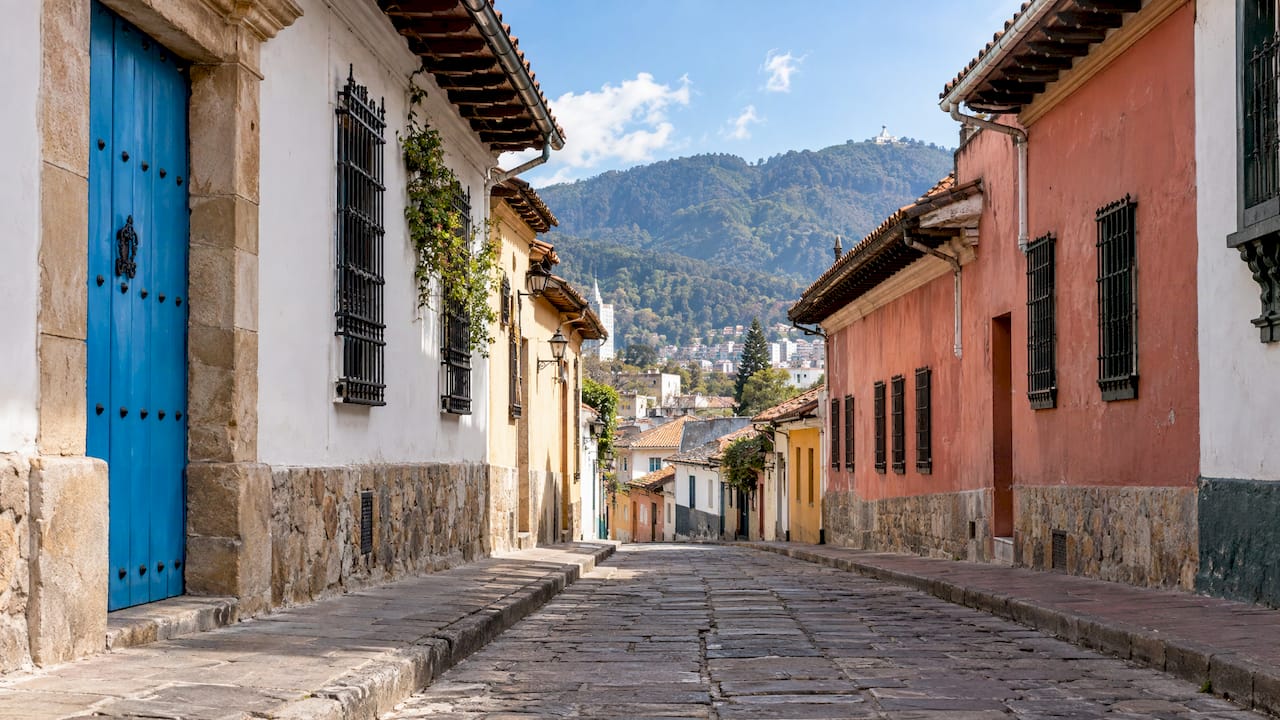
Bogotá rewards a stay of three to four days: enough to cover the colonial streets of La Candelaria, the Gold Museum, the Monserrate viewpoint, a Sunday on the car-free Ciclovía and a couple of evenings in the city’s restaurant districts. The city sits high in the Andes, it is cool all year, and a handful of safety habits make the trip smoother. This guide gives you the sights, the practical details and the precautions, so you can decide what goes on your list and what to skip.
Why Bogotá works for a first Colombia trip
Bogotá is Colombia’s capital and its biggest city, and it is the country’s main gateway for international flights. It is also a city of contrasts. You can spend a morning in a 16th-century neighborhood, an afternoon in a world-class gold collection and an evening in a dining district that fills up with locals, not just visitors.
The city’s own tourism office frames the highlights around the Botanical Garden, Mirador del Paraíso, Calle de los Anticuarios, the Zona G, Zona T and Parque de la 93 gastronomic circuit, the Gold Museum, Usaquén, La Candelaria, La Concordia Market, Monserrate and the San Felipe Creative District. That list is a good skeleton for a plan, and the rest of this guide fills it in.
Altitude and weather: what to pack and how to pace yourself
Bogotá is at an altitude of 2,625 meters above sea level, about 8,600 feet. That is higher than Denver and higher than most US ski-town bases. Many visitors feel it on the first day as a mild headache, shortness of breath on stairs or poor sleep. Keep your first day light, drink water and go easy on alcohol until you adjust. If you have a heart or lung condition, or you are pregnant, talk with your doctor before you book.
The weather is steady rather than seasonal. Visit Bogotá gives average temperatures of 10 to 20 °C (50 to 68 °F), with heavier rain mainly in April and May and again in October and November. In practice that means:
- Pack layers: a light jacket, a sweater and a packable rain shell.
- Expect sun, cloud and showers in the same afternoon.
- Wear shoes that handle wet cobblestones in La Candelaria.
- Bring sunscreen. The sun is strong at this elevation, even when it is cool.
The drier months are easier for walking and for Monserrate views, but the city is a good trip in any month if you plan around the rain.
Health notes for the city
The CDC says the yellow fever vaccine is not recommended for travel limited to Bogotá or areas above 2,300 meters. The same page notes that there is no malaria transmission in Bogotá, Cartagena or Medellín, with transmission only below 1,700 meters. It also lists a country entry requirement for yellow fever vaccination for arriving travelers aged 1 year and older, so read the CDC page for your exact route and see a travel clinic or your doctor before you go, especially if you plan to leave the city for lower, warmer regions.
How many days you need
Two days covers the essentials: La Candelaria, the Gold Museum and Monserrate. It feels rushed, and the altitude can eat into your first day.
Three to four days is the sweet spot. You add Usaquén or the San Felipe Creative District, a food-focused evening, a Sunday Ciclovía and one slow morning at the Botanical Garden.
Five days or more lets you add a day trip outside the city, a longer market and museum circuit, or a live music night. If you are building a wider Colombia route, Bogotá works well as the first stop, because you can adjust to the elevation before heading anywhere active.
A sample four-day outline:
| Jour | Morning | Afternoon | Evening |
|---|---|---|---|
| 1 | Easy walk in La Candelaria | Gold Museum | Early dinner, early night |
| 2 | Monserrate | La Concordia Market area | Dinner in Zona G |
| 3 | Botanical Garden | Usaquén historic center | Zona T or Parque de la 93 |
| 4 | Ciclovía (Sunday) or San Felipe art district | Mirador del Paraíso | Flexible |
If your four days do not include a Sunday, swap the Ciclovía for the art district and shift the Gold Museum to another day.
The sights worth your time
La Candelaria
This is the historic center, with narrow streets, colonial buildings, street art, small museums and cafes. It is the easiest neighborhood to explore on foot, and it is the best place to start. Go in the morning, when the streets are quieter, and keep your phone in your pocket when you are not using it. Candelaria is also the area where visitors most often hear safety warnings, so see the safety section below before you wander at dusk.
The Gold Museum
The Gold Museum is the one museum most visitors put at the top of the list. According to the city’s tourism page, it holds more than 34,000 gold pieces and alloys, plus around 25,000 objects in ceramics, stone, shell, bone and textiles. That page, published in 2025, listed admission at COP 5,000 from Tuesday to Saturday, free on Sundays, and closed on Mondays. Opening hours and prices change, so check the museum’s official page before you go. Sundays are free, so expect crowds.

Monserrate
Monserrate is the mountaintop sanctuary above the city and the classic Bogotá viewpoint. The views over the grid of the city are the reason to go, and the altitude is higher still at the top, so walk slowly, bring a layer and go on a clear morning if you can. Visit Bogotá lists the Basilica of Monserrate among its iconic spots.
Usaquén
Usaquén is a former village at the north end of the city, with a small colonial plaza, restaurants and a popular weekend market. It is a relaxed half-day, and an easy pairing with a nearby dinner.
San Felipe Creative District
This is the art-gallery and studio neighborhood, and it fits visitors who prefer contemporary art and street art over colonial landmarks. The city’s first major official tourism publication, “Bogotá, Your Home”, also highlights the Gold Museum, the Botanical Garden, the Rock al Parque festival, Monserrate and the Ciclovía, so you will see these names repeated across official material.
Botanical Garden and Mirador del Paraíso
The Botanical Garden is a calm, green stop and a good low-effort day while you adjust to the altitude. Mirador del Paraíso is a viewpoint on the list of icons, and a good choice if you want a view without the Monserrate climb.
The Ciclovía
On Sundays and holidays, the city closes main roads to cars so cyclists, runners and walkers can use them. It is one of the most distinctive things Bogotá does, and you do not need to be a serious cyclist to enjoy it. Rent a bike, pick a stretch and ride at an easy pace. At this altitude, easy is the right pace.

Where to eat
Bogotá’s food scene is broad. The Zona G (the “gourmet” zone), Zona T and Parque de la 93 form the city’s best-known restaurant circuit, and they are where you will find the most polished tasting menus and cocktail bars. For something more everyday, head to La Concordia Market area and the small restaurants in La Candelaria.

Whatever you choose, treat food as part of the itinerary, not an afterthought. A few habits help: go to lunch places at midday when locals do, order the set menu of the day where one is offered, and book dinner in the popular districts on weekends. If you like to plan your meals the way you plan your sights, this piece on local food experiences has useful habits for eating well in any city.
Nightlife and live music
Zona T and Parque de la 93 are the best-known evening districts, with bars, clubs and late restaurants. Bogotá also has a serious live music calendar, and the city’s official tourism publication names the Rock al Parque festival among its highlights. If Latin sounds are why you are going, this primer on Latin urban music gives you the background to know what you are hearing.
For nights out, plan your way home before you go. Use a licensed taxi or a ride-share app, as covered below, and avoid walking long distances late at night.
Getting around
The practical options are walking in the compact neighborhoods, the TransMilenio bus system for longer trips, and taxis or ride-share apps for evenings and airport runs. Smartraveller recommends booking licensed taxis by phone dispatch or through ride-share apps, which is also the advice that matters most for your first night.
From El Dorado Airport, the center is roughly 15 km away. One airport-transfer guide that tracks the city’s published taxi tariff puts a metered ride to the center at roughly COP 36,000, or about COP 40,000 at night. Tariffs are updated periodically, so treat it as a ballpark, and ask the dispatcher or app for the fare before you get in.
Traffic is heavy at rush hour. Leave extra time for anything with a fixed schedule, such as a flight or a timed entry.
Staying safe in Bogotá
Bogotá is a trip that millions of visitors make without incident, and most safety advice comes down to the habits you would use in any large city. Australia’s Smartraveller advises a high degree of caution in Colombia overall. The UK government’s page, updated on 30 October 2026, flagged a temporary deployment of security forces in Cúcuta, a city near the Venezuelan border, far from Bogotá. Check your own government’s current advice before you book, and again before you fly. The US State Department publishes its own Colombia advisory.
The issues that matter most for visitors in the capital:
- Petty theft. Pickpocketing and bag snatching are common in Bogotá, including near hotels and at the airport, according to Smartraveller. Keep your phone out of sight on the street and your bag zipped and in front of you.
- Fake police. Criminals pose as police officers and ask to inspect documents or cash. If this happens, ask to be escorted to the nearest CAI, the neighborhood police post, before handing anything over.
- Card overcharging. It is common in tourist areas. Ask for a printed price list and cover the keypad when you enter your PIN.
- Drink spiking. Smartraveller warns about drug-facilitated crime. Never leave a drink unattended and be careful with strangers, including people you meet on dating apps.
Visit Bogotá’s own traveler page adds a practical checklist: book services with RNT-registered companies (the national tourism registry), carry copies of your identification rather than the originals, keep valuables at your lodging, stick to crowded, well-lit areas, carry only the cash you need, use your phone only in safe places and turn off Bluetooth.
Where you stay matters too. The neighborhoods around Usaquén, Zona G, Zona T and Parque de la 93 are the ones most visitors choose for lodging, and La Candelaria suits travelers who want to be in the historic center and are comfortable with the extra caution it calls for at night.
A realistic budget
Bogotá is generally inexpensive by US standards for food, museums and local transport, and costs climb in the polished restaurant districts and in hotels in the north of the city. Entry to the Gold Museum was listed at COP 5,000 in the city’s 2025 tourism page, a few dollars at most, and many of the city’s best experiences, such as walking La Candelaria or riding the Ciclovía, cost almost nothing. Exchange rates move daily, so convert from a live rate before you travel.
Where you will spend more: airport transfers, taxis at night, tasting menus and hotel stays in the upscale north. If you are hunting deals on flights and hotels, shoulder months around the rainy seasons are the time to watch.
Your Bogotá trip, with a little help from Travel Talk Today
If you want to keep planning, Travel Talk Today sorts its posts into reviews, guides and deals, so you can go straight to the kind of help you need: a destination guide for the sights, a deal for the flight, a review before you book. You will also find videos, podcasts and reader polls where travelers swap experiences. Start with the Travel Talk Today home page, or browse travel videos if you would rather see a place before you pick it.
If you are comparing Bogotá with a Southeast Asia trip, the Vietnam travel guide is a separate planning job, built around regional food and a north-to-south route, and it is for readers who are choosing between those two destinations.
FAQ
Is it safe to visit Bogotá right now?
Millions of travelers visit Colombia, and most stick to a few habits that keep trips trouble-free. Official advisers, including Smartraveller, ask visitors to use a high degree of caution, so use licensed taxis or ride-share apps, keep valuables at your lodging, and watch your drink. Check your own government’s travel advice before you fly, because advisories are updated.
How many days in Bogotá is enough?
Three to four days covers the main sights, a food evening and a Sunday Ciclovía at a comfortable pace. Two days works if you are short on time, and five or more suits you if you want day trips or a slower rhythm. The altitude is a good reason not to cram the first day.
Is Bogotá worth visiting?
Yes, if you like walkable historic streets, strong museums, a serious restaurant scene and live music. The city’s official list of icons shows the range, from the Gold Museum and Monserrate to the Botanical Garden and the San Felipe art district. It is cool and often rainy, so it suits travelers who enjoy culture and food more than beach weather.
Are Colombians friendly to Americans?
Visitors generally find Bogotá welcoming, and a few words of Spanish go a long way in restaurants, shops and taxis. Practical habits count more than nationality: keep your documents copied, your valuables stowed and your plans simple at night. Check the current US State Department advisory for official guidance before you travel.
What should I pack for Bogotá?
Layers. Temperatures average 10 to 20 °C (50 to 68 °F), and rain showers are common, especially in April, May, October and November. Bring a light jacket, a rain shell, comfortable walking shoes, sunscreen and a daypack that closes securely.

Laisser un commentaire