
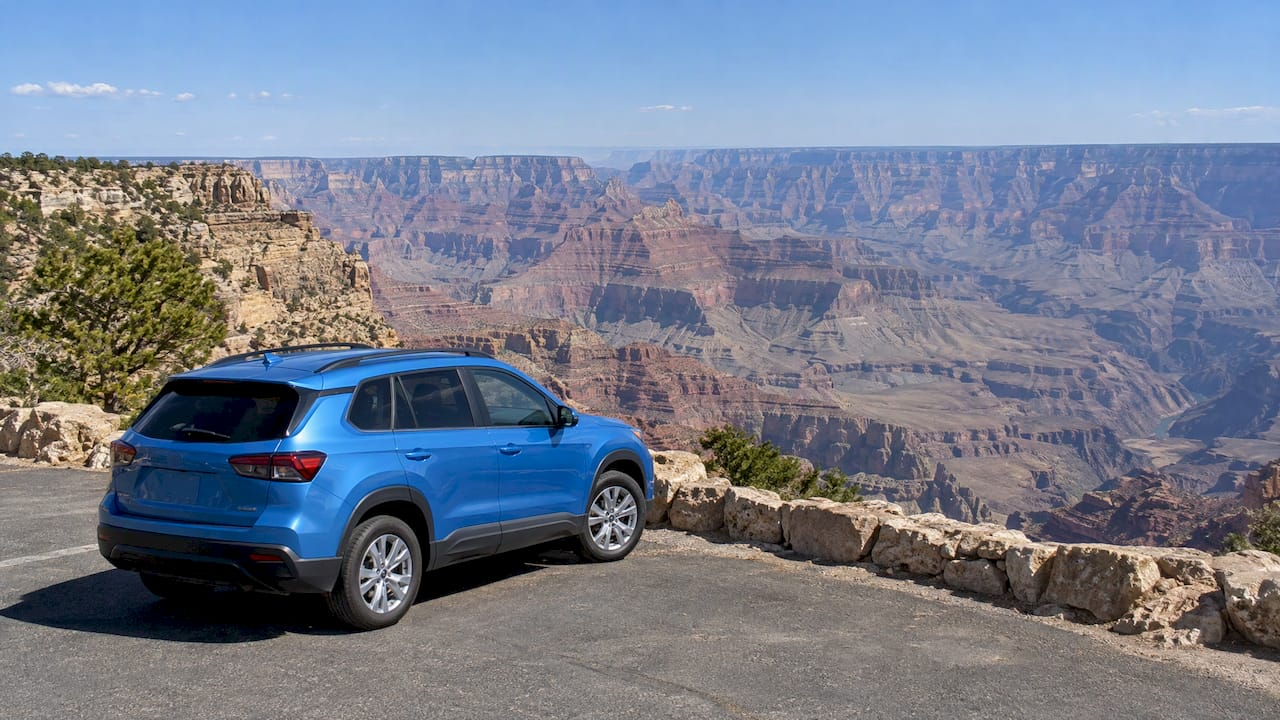
The Grand Canyon is not one destination an hour or two from the Strip. It is a canyon about 277 miles long, and the “Grand Canyon” you reach from Las Vegas depends on which rim you pick. The West Rim is the short hop, roughly a half-day each way by car. The South Rim is the national park most people picture, and it takes around five hours each way. Choose the rim first. Everything else, from cost to timing, follows from that.
This guide covers both rims, the real options for getting there, what each costs, the park fees, and when to go. It is written for travelers who want to make the call before they book, not after.
Pick your rim first: West Rim or South Rim
Most confusion about this trip comes from treating the two rims as interchangeable. They are not.
The West Rim (Grand Canyon West) sits on land of the Hualapai Tribe, outside Grand Canyon National Park. The National Park Service notes that the tribe chose this site at the far western end of the canyon to offer visitor services including the Skywalk. It is the closer option from Las Vegas, which is why it dominates day-trip itineraries.

The South Rim is inside the national park and is its main gateway. It has the village, the rim trails, the viewpoints along the rim road and the broader scenery most people associate with the canyon. The National Park Service says it is open year-round, although roads can close temporarily.
A simple way to decide:
| If you want | Pick |
|---|---|
| The shortest drive and a managed, attraction-style visit | West Rim |
| The Skywalk glass bridge | West Rim |
| Rim trails, the classic national park views and a sunset or sunrise | South Rim |
| A road trip with stops along the way | South Rim |
| To be back in Las Vegas the same evening without a marathon day | West Rim |
The NPS puts the distance between the two rims at about 250 miles by road, a five-hour drive. That gap is the main reason you cannot casually “do both” in one outing.
How far is it, and how long does the drive take?
For the South Rim, a route estimate lists a 275.5-mile drive taking about 4 hours 42 minutes. Greyhound’s route page shows a 276-mile journey of about five hours from Las Vegas to the South Rim. Plan on roughly 4.5 to 5.5 hours each way once you add a fuel stop, a coffee and the traffic leaving the Las Vegas valley.
The usual route heads southeast on US-93 over the Hoover Dam bypass, then continues on I-40 and AZ-64 into the park. The last stretch into Grand Canyon Village is on park roads, where you will want time to find parking.
The West Rim is much shorter. The NPS directions for the Skywalk describe the final approach as Pierce Ferry Road, then Diamond Bar Road, after leaving US-93. Expect something in the neighborhood of two to two and a half hours each way, with the last stretch on a remote road where cell service can be patchy. Download your map before you leave the highway.
A day at the South Rim therefore means about ten hours behind the wheel for perhaps three to four hours at the edge. A day at the West Rim means roughly four to five hours of driving and much more time on site.
Can you do it in one day?
Yes, but the answer is different for each rim.
West Rim in a day is comfortable. Leave early, pass the Hoover Dam area, spend the middle of the day at the viewpoints, and you are back for dinner on the Strip.
South Rim in a day is possible and tiring. You would leave before sunrise, reach the park by late morning, and start back by mid-afternoon to avoid driving the dark desert highway late. It works if you accept that you are buying views, not a hike. Tour companies sell this exact itinerary as a long coach day, which tells you how much of the day is spent on the road.
South Rim overnight is the version most travelers say they would repeat. Sleeping near the park or in Williams or Flagstaff means you get the rim at sunset and again in the morning light, and you skip the worst of the fatigue. If you can spare two days, this is the better trip.
One safety point belongs here. A long drive after a full day of sun and walking is when tired drivers make mistakes. If the day is already long, shorten your rim time or stay the night rather than pushing back in the dark.

Ways to get from Las Vegas to the canyon, and what they cost
The options fall into a few types. The figures below are published estimates for their period. Fares and fuel prices move, so check live prices before you commit.
Driving yourself
Driving is the most flexible way to go. A route planner lists driving at $46 to $66, which is an estimate of fuel cost, not a fixed fare. Your real cost depends on your vehicle, gas prices and whether you rent a car. A rental adds the daily rate, any one-way or mileage terms and insurance, so price it as a whole.
Driving lets you stop at the Hoover Dam area, pick your own timing and reach the rim for sunrise or sunset. It also puts the whole day’s driving on you, which matters on a 276-mile route.
Bus or shuttle
Greyhound lists fares from $113.99 on the Las Vegas to South Rim route. The same route planner shows a shuttle at $99 and bus connections via Phoenix and Flagstaff at $120 to $183. Combinations of bus and train run $177 to $289, and bus plus flight $113 to $399.
Public transport to the South Rim works if you are not renting a car, but connections add hours. For most travelers, it is slower than driving and harder to fit into a single day.
Guided tours
A guided coach tour sells convenience: hotel pickup, a driver, and a fixed itinerary. Tours range from budget motorcoach day trips to overnight packages, plus helicopter and small-plane flights that shrink the transit time dramatically. Prices vary widely by season, group size and add-ons, so compare what is included (park entry, meals, Skywalk access, time at the rim) rather than just the headline fare.
Quick comparison
| Option | Best for | Published cost estimate | Main trade-off |
|---|---|---|---|
| Drive yourself | Flexibility, sunrise or sunset | $46 to $66 in fuel (estimate) | Long day at the wheel |
| Shuttle | No driving, direct | $99 | Fixed schedule |
| Bus | No car, tight budget | From $113.99 | Slow, long day |
| Bus plus flight | Skipping the road | $113 to $399 | Several connections |
| Tour | Hands-off day | Varies by tour | Less time at the rim |
These ranges come from route-planning pages and the operator’s own listing, so treat them as a starting point for comparison, not a quote.
What does the trip really cost?
Transport is only part of the bill. For a day trip add:
- Park entry. The NPS lists admission at $35 per private vehicle, $30 per motorcycle, or $20 per person arriving by railway, park shuttle bus, private rafting trip, on foot or by bicycle. The pass is valid for seven days. Tours often bundle this, so check whether it is included.
- Food and water. Services at the rim are limited and priced accordingly. Bring water and snacks.
- West Rim admission. Because Grand Canyon West is run by the Hualapai Tribe rather than the National Park Service, it has its own entry and attraction pricing. Check the official Hualapai page for current packages before you go, since those prices change.
- Parking and fuel. Budget a little extra for gas at the last big town before the park.
A realistic South Rim day for two people sharing one car is a modest figure. The same two people on a coach tour or flight package pay several times that. If price is your priority, driving with a full car is the cheapest way to see the canyon, and the park fee is per vehicle, not per person.
If you are also pricing flights into Las Vegas for the trip, our guide to checking airfare prices walks through how to compare fares before you book.
The best time to go
The NPS describes the seasons plainly in its trip planner:
- Spring and fall are changeable but suitable for hiking in the canyon. Rim snow and strong winds can still show up.
- Summer brings warm rim conditions, with rim temperatures averaging 48 to 83°F (9 to 28°C). Inside the canyon, averages run 72 to 104°F (23 to 40°C), and the NPS warns that unprepared hikers face potentially fatal heat. Summer afternoons also bring monsoon lightning.
- Winter offers possible snow views but cold conditions and temporary road closures, even on plowed South Rim roads.
The South Rim is open all year. North Rim facilities open in mid-May and close in mid-October, and the North Rim is a much longer trip from Las Vegas, so most visitors from the Strip head for the South or West Rim.
For a first trip, fall and spring give the best balance of comfortable temperatures and open access. If you must go in summer, plan to be at the rim early and avoid hiking below it in the heat of the day.
Safety basics before you go
The NPS advises visitors to:
- Drink enough water.
- Keep a safe distance from the rim edge.
- Not feed or approach wildlife.
- Move away from the rim and shelter during thunderstorms.
Check the current weather and road conditions on the day you leave. In winter especially, a closure can change your route. Tell someone where you are going, and keep your phone charged for the remote final miles.
A sample day plan for each rim
West Rim day
Leave Las Vegas by 7 a.m. and take US-93 south through Boulder City. Reach Grand Canyon West late morning, spend the middle of the day at the viewpoints and the Skywalk, and start back mid-afternoon. You can be on the Strip by early evening with time for dinner.
South Rim overnight
Leave Las Vegas early on day one, stop for lunch in Williams or on the highway, and reach the village by mid-afternoon. Walk part of the rim trail before sunset, and sleep near the park. On day two, catch the sunrise, walk a little more, and drive back in daylight. This pace gives you the canyon in two light conditions and keeps the driving to a sane length.
If you book lodging or a tour, keep a list of what to sort out after you confirm. Our checklist on what to do after you book covers the loose ends that are easy to forget before a long drive.
Find more trip ideas with Travel Talk Today
We sort our posts into reviews, guides and deals, so you can go straight to what you need: a destination guide for the planning stage, a review before you spend, a deal when you are ready to book. Browse the full set on the Travel Talk Today homepage, and share your own canyon day with other readers in our community polls and discussions.
FAQ
How long does it take to drive from Las Vegas to the Grand Canyon?
To the South Rim, about 4 hours 42 minutes by a route estimate, and closer to five hours with stops. To the West Rim, expect roughly two to two and a half hours each way. Add time for traffic leaving Las Vegas and for the final remote stretch.
How much does it cost to visit the Grand Canyon from Las Vegas?
It depends on the rim and the way you go. Driving is estimated at $46 to $66 in fuel, shuttles and buses start around $99 to $114, and park entry at the South Rim is $35 per vehicle. Tours and flights cost more but bundle transport and sometimes entry.
Is the South Rim worth it?
If you want rim trails, classic national park views and sunrise or sunset, yes. It works best as an overnight trip, because the drive uses most of a single day. If you only have one day, the West Rim gives you more time at the canyon.
What is the best month to go?
Spring and fall are the most comfortable for being active, according to the NPS trip planner. Summer rim temperatures are warm, but heat inside the canyon can be dangerous. Winter can bring snow views and temporary road closures.
Can I see the canyon in one day?
Yes. The West Rim suits a day trip well. The South Rim is possible as a very long day, but most travelers enjoy it more with a night nearby.


Leave a Reply