
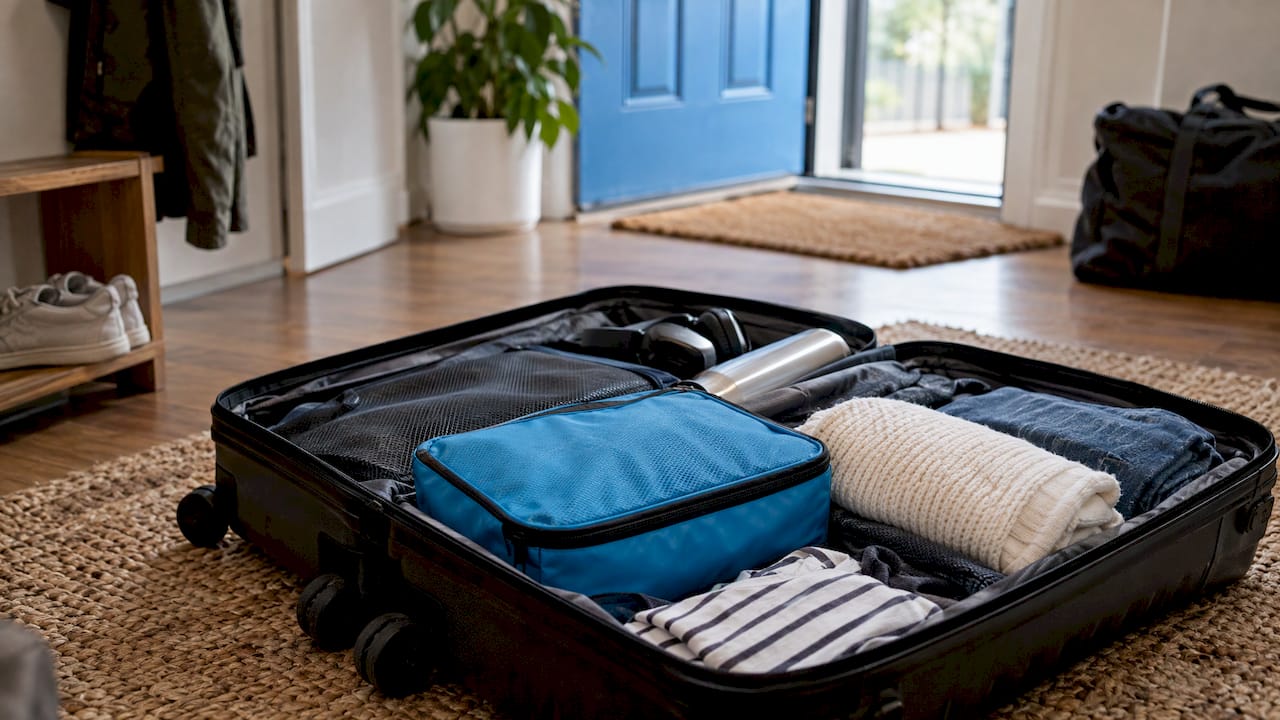
The best packing list is a short, fixed core you reuse every time, plus a few additions for your destination, trip length and activities. Build it in layers: documents and money first, then a carry-on that can survive a lost suitcase, then about a week of clothes, then the extras. This guide gives you each layer, the numbers that keep clothing in check, and the mistakes that cause overpacking.
If you are still choosing where to go, our family vacation planning guide covers the steps before the suitcase comes out.
Start with what you cannot replace
Sort your list by how hard each item is to replace. A shirt can be bought anywhere. A passport cannot. The rule in one international checklist is simple: if you can’t cheaply replace an item at your destination, it flies in the cabin with you.
Documents and money
- Passport or ID. For international trips, a passport valid at least six months beyond your return date is recommended, because many countries refuse entry otherwise. For US domestic flights, a passport or REAL ID has been required since May 7, 2025.
- Visas or entry authorizations, boarding passes, booking confirmations and itinerary.
- Travel insurance details, in hard copy as well as on your phone. If you are traveling with kids, see our guide to family travel insurance.
- Two payment cards from different networks, kept in different bags, plus some local cash.
- Copies of key documents. Scans or photocopies of important papers and passport-type photos speed up replacements. Keep the passport copy separate from the passport.
- Driver’s license and International Driving Permit if you plan to rent a car abroad.
Tell your card company before traveling overseas, as Allianz Partners advises.
Medications and health items
Carry prescription medication in its original pharmacy packaging, with a few extra days’ supply. For controlled or injectable drugs, bring a copy of the prescription and check the destination’s rules for restricted medications, as the 2026 international checklist notes. Ask your doctor or pharmacist about any medication you are unsure can cross a border. Add glasses or contacts, hearing-aid batteries, and a basic first-aid kit with bandages and pain relievers, as Travel Guard suggests.
Pack a carry-on that survives a lost bag
The most useful habit in any packing list is to assume your checked bag will be late. AAA says the carry-on should hold enough clothing and toiletries for 24 hours, plus medications, valuables and travel documents. Condé Nast Traveler’s Hannah Chubb makes the same point: pack your personal item to get you through a day without your suitcase.
| Category | Carry-on items |
|---|---|
| Must-have | Wallet, passport, boarding pass, medications, keys |
| Electronics | Phone and charger, earbuds, portable charger, power adapter |
| Comfort | Travel pillow or scarf, earplugs, eye mask, lip balm |
| Health | Hand sanitizer or wet wipes, empty water bottle, snacks |
| Backup | One full change of clothes, toothbrush and toothpaste |
This follows Outdoor Gear Lab’s tested carry-on list. Two details matter at security. Liquids in carry-ons follow the 3-1-1 rule, meaning containers of 3.4 ounces or less in one quart-size clear bag, as AAA notes. Power banks belong in the cabin, and most airlines cap them at 100Wh, so check your airline’s rule.
A small trick from the editor-in-chief of Travel + Leisure, quoted by Allianz Partners: keep a zippered pouch with headphones, earplugs, phone and wallet. Pull it out, drop it at your seat, and stow the bag fast.
If you carry a nice phone, a protective case is part of the kit. This guide on protecting your phone while traveling explains what to look for.
How much clothing to pack
Most overpacking is clothing. Three rules of thumb keep it in check.
The 3-5-7 rule. For a week: 3 bottoms, 5 tops, and 7 sets of underwear and socks. Tops are light and show the most, while bottoms repeat easily.
The 1-2-3-4-5-6 rule. REI’s version is one hat, two pairs of shoes, three bottoms, four tops, five pairs of socks and six pairs of underwear, enough for two weeks with laundry.

Pack for seven days, not the whole trip. Travel + Leisure recommends one week of clothing and doing laundry on longer trips. Outdoor Gear Lab’s one-week guide is 5 to 6 tops, 3 to 4 bottoms, 1 to 2 pairs of shoes and a change of underclothes each day.
A baseline clothing list
Lonely Planet’s baseline includes an outer layer, a hoodie or sweater, casual tops, comfortable pants, shorts or skirts, comfortable walking shoes, socks, underwear, sleepwear, a sun hat, a swimsuit and one smart outfit for an event. Bring at least one jacket even in hot climates, since rain, wind and chilly indoor spaces catch people out.
Laundry makes small bags possible
Plan to wash. A travel clothesline, powder detergent and a universal sink stopper turn a week of clothes into a month of clothes. Colin Mairs of Mondumo’s rule is to wash when you can, not when you need to. Quick-dry fabrics help.

Adapt the list to your trip
Once the core is packed, ask five questions. The Local Guide Abroad’s framework covers climate, movement, activities, luggage limits and laundry access. Then add by trip type, following Travel Guard’s breakdown:
- Beach: sun protection, swimsuits, a quick-dry towel.
- City: walking shoes, layers, a daypack, offline maps.
- Adventure: moisture-wicking layers, hiking boots, rain gear, a first-aid kit, and insurance that covers your activities.
- Multi-stop: a capsule wardrobe in matching colors, laundry supplies, backup documents, plug adapters.
Group trips, festivals and events add their own needs: comfortable shoes, a small crossbody bag and a portable charger. If you are planning one, this page on concerts, festivals and major events group stays shows how large groups organize lodging, which tells you what space you have for gear.
For long trips across several climates, Sophie Dodd of Travel + Leisure swaps bulky items for light ones: wrinkle-release spray instead of a steamer, a packable down jacket instead of a bulky sweater.
Electronics checklist
Lonely Planet’s list is a phone, a USB-C charger with cables, an eSIM or roaming plan, headphones with pre-downloaded media, a power bank, plug adapters, an item tracker such as an AirTag, and any camera or tablet with chargers.
Checked bag tips
- Put ID tags inside and outside, and leave your home address off the tags. AAA recommends this.
- Use TSA-approved locks in the US, since agents can cut others. TSA exists only in the US, so abroad bring a spare lock or cable ties.
- Bag liquids in plastic to catch leaks. Pressure changes in flight can make squeeze bottles leak.
- Photograph your bag so you can describe it in a lost-luggage report, and use a luggage scale to avoid overweight fees.
- Bring a packable tote for souvenirs.
Stay organized and avoid overpacking
- Start early. Condé Nast Traveler’s Chubb suggests building clothing piles a week ahead and keeping a morning-of list for last-minute items like chargers.
- Separate needs from wants. REI advises writing both, cutting the wants in half, and removing anything you’re not sure about, since most things can be bought at the destination.
- Lay it all out. Then remove at least three “just in case” items, a final check from The Local Guide Abroad.
- Use packing cubes. They keep outfits sectioned, and one cube can hold dirty laundry.
- Leave 20% of the bag empty for souvenirs, about 8 liters in a 40L bag.
Doug Dyment, author of OneBag.com, calls a personal packing list a contract you make with yourself. Save yours after each trip and edit it: strike what you never used, add what you wished you had.
Packing for deals and community trips
Our readers are often chasing a bargain, and a light bag helps there too. Carry-on-only fares avoid checked-bag fees, and a trimmed list makes that realistic. Browse the guides, reviews and deals on Travel Talk Today to match your list to a destination, and see how travel loyalty programs can lower the cost of the trip itself. Share what you packed, and what you left behind, in our reader polls and discussions.
Food-focused trips deserve their own line on the list: a reusable bag, a small cutlery set and an appetite. For inspiration, read about culinary experience travel.
FAQ
What is the 3-5-7 rule in packing?
It is a one-week clothing formula: 3 bottoms, 5 tops, and 7 sets of underwear and socks. Tops get worn once and show most, while bottoms can repeat. Adjust it for climate and activities.
What should always go in a carry-on?
Documents, medications, valuables, electronics and chargers, plus a change of clothes and basic toiletries for 24 hours. Keep liquids in a quart-size bag at 3.4 ounces or less per container.
How do I pack for a long trip?
Pack about seven days of clothes and plan to do laundry. Choose quick-dry fabrics and light items, and bring a sink stopper and clothesline. You can buy most extras on the road.
How early should I start packing?
One to two days before is the minimum, and building piles a week ahead works better. Keep a morning-of list for phone, charger, wallet and anything in the fridge.


Leave a Reply